Here's the big news I promised you last week: Seasons of the Fool is one of the first books accepted into Amazon's Kindle Scout program. And I'm asking for your help.
First, let me explain what Kindle Scout is, as it's brand new. Amazon is accepting never-before-published manuscripts for this program. It's posting the cover, description, and an excerpt for each book for one month only.
Readers will have the chance to peruse the offerings and nominate their favorites. You can have up to three favorites at a time. But it's not a one-time thing; Amazon intends to post new books to the program all year 'round. When the month is up for one of your favorites, that slot will open up so you can nominate another book. You can click here for more reader info for Kindle Scout.
But what's the point? Well, books that do really well will be picked up by Amazon's new Kindle Press. The author gets a $1,500 advance and a five-year contract.
So what I'm hoping you will do tomorrow -- the link won't be live until then -- is go to the Kindle Scout page for Seasons of the Fool and use one of your nominations for my book. If Seasons is accepted by Kindle Press, you would get one of the first copies free. I'm going to send a reminder email tomorrow to the folks on my mailing list, so if you're not on the list yet but you'd like a reminder, you can click here to sign up. Or you can use the "No spam. No, really" form at the top of the column to the left -- they both go to the same place. And I'll also be posting reminders in the usual places (Facebook, Twitter, G+) throughout the month.
To further entice you, here's a little more about the book:
~~~
A Fool's journey begins with a single step...
Julia has fled Chicago for her grandparents’ old cottage–a refuge from her failed marriage. But she may have to testify against her husband, who defrauded his wealthy investors. And she’s falling for David, an old friend trapped in his own troubled marriage.
Seeking guidance, Julia finds a labyrinth in the woods–and the elderly women who own it have their own reasons for wanting her to walk it.
What Julia learns in the labyrinth could change all their lives, if only she would take it to heart.
~~~
Thanks so much in advance for your help.
***
This moment of bloggy entreaty has been brought to you, as a public service, by Lynne Cantwell.

Showing posts with label Kriss Morton. Show all posts
Showing posts with label Kriss Morton. Show all posts
Sunday, October 26, 2014

Sunday, January 20, 2013
Close enough for a man on a horse.
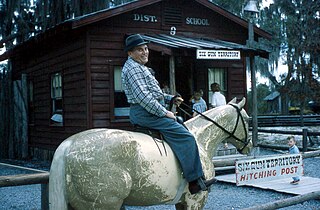
"Close enough for government work! Ain't makin' a watch!"
Yesterday, I learned a new handy phrase for something that's less than perfect, but acceptable. At a gathering of a group of crafters (some quilters, some knitters, some doing other handiwork), one woman said she'd once had an instructor who said of her student work, "A man riding by on a horse couldn't tell the difference."
All these phrases are ways to banish perfectionism. Of course, we should always strive to do our best work, to catch our mistakes and fix them, and so on. Nobody wants to be labeled sloppy. But we're all human, and sometimes we mess up. And sometimes when we try to fix something, the fix is worse than the original mistake.
That's where I found myself this week with the sweater I've been telling you about. I thought I had a handle on knitting the nice, wide cable that goes up one side of the front of the sweater. (You can see a picture of what it's supposed to look like on my post from two weeks ago.) So I tried to work on it while watching a movie. Sooprise, sooprise, sooprise -- I made a mistake, and I didn't notice it 'til six rows later. Because the mistake was on the front, I felt compelled to go back and fix it. Let me tell you, ripping a cable back six rows, and then trying to figure out where you are on the chart, is no fun at all. I managed to fix the first mistake, but my fix made something else look funny, and.... I'm sure you can see where this is going. After spending several hours over the course of two days on the same six rows of 28 stitches, I finally gave up -- but not until after it occurred to me that I could embroider some chain stitches over the tiny part that still doesn't look right and...all together now...a man riding by on a horse wouldn't be able to tell the difference.
Will it be perfect? Nope. Will the garment still be wearable? Totally. Will anybody be able to tell the difference? Probably not even if I tell them. And it's entirely possible that even I won't be able to tell.
The point is that I could have spent another couple of hours making myself crazy, trying to get the cable absolutely perfect. That's the trap of perfectionism -- not just in knitting or sewing, but in writing, too. How much time should you spend on a first draft? How much time on a rewrite? Should you torture yourself with making sure that each sentence you write absolutely drips priceless pearls of prose before you move on to the next one? Will you ever be completely satisfied?
Last night, I began the second editing pass on Gravid. When I do a read-through, I pay particular attention to any phrases that jar my internal ear, and any word whose meaning doesn't quite convey what I'm trying to say. Sometimes I move phrases around. Occasionally I move sentences, or paragraphs, or even blocks of text, and then I have to write connections in order to graft them into their new places and bridge the holes they left behind. Sometimes I move the attribution from one end of the sentence to the other, or embed it in the middle of the quote, or take it out of the middle and put it at the beginning or the end.
But to be honest, many sentences I don't fuss with at all. And sometimes after I've fiddled with a particular word or sentence for a while, I decide it was okay to start with. Not perfect, maybe, but still readable. A man on a horse wouldn't know the difference.
Somebody told me today that she had decided she would never write the Great American Novel, so she moved on to other things. Usually, I applaud any effort toward self-knowledge, which is a fine and necessary thing. But the phrase "the Great American Novel" struck me, and started me thinking on this business of perfectionism.
When it comes to writing, is the Great American Novel the only worthwhile goal? If your first draft is a mess, riddled with plot holes and clunky phrases, are you a failure as a writer? Is perfect the only thing worth striving for? Is that what you think, Bunky?
Well, I don't think so. In fact, I reject that sort of thinking wholesale. The only thing any of us can do is to tell our own stories in our own ways. Writing is a craft, to a large degree. Plot holes can be fixed; so can clunky phrasing. You may have to write several books before you've got one that's ready for prime time, but that's part of learning the craft. And even then, it doesn't have to be the most perfect book ever written. If a man riding by on a horse can't tell the difference, it's close enough for government work. Ain't making a watch!
***
I had a terrific time Friday night with Coral Russell and Kriss Morton on their Blog Talk Radio show. Both of them -- and author/blogger Leanne Herrera, too -- had such nice things to say about my work that it's a wonder I could get my head through the doorway afterward. Thanks, ladies! (If you missed the show, I've put a link to the left, as well as on the Radio Appearances tab.)
The Orangeberry Big Bang blog tour for Tapped is underway! Check the Tour Dates tab for this week's stops. And have a great week, everyone.
***
This moment of imperfect blogginess is brought to you, as a public service, by Lynne Cantwell.
Subscribe to:
Posts (Atom)