Showing posts with label Great American Novel. Show all posts

Sunday, August 4, 2019

On peak retirement age.

My head is full of Elementals and my Facebook feed is full of the mass shootings over the past couple of days, neither of which I want to talk about right now. So for this week's post, I'm going back to an idea that I threatened to write about a few weeks ago.

Gerd Altmann | CC0 | Pixabay
What piqued my interest was an article in The Atlantic about how long people should plan to keep working. The article is not about finances. If you talk to any financial planner, they will tell you to keep working and saving 'til you have a million dollars in your retirement account. Right? And how realistic is that when the average amount people ages 55 to 64 have in savings is $107,000? (Even the article at the link is on this train; it says people in their 60s need to have saved eight times their annual salary. Yeah, right.) The longer you listen to these folks, the more depressing it gets. You may end up feeling like you'll never have enough money to retire.

That's not realistic, either. Most American workers retire at 62, which is not-so-coincidentally the age at which Americans are first eligible to collect Social Security. Often, people intend to work longer, but they underestimate how long they'll stay healthy enough to keep their jobs. The most realistic approach, then, would be to figure out what your retirement income will be, given where you are right now, and rearrange your lifestyle to make that work.

But that's not what the Atlantic article is about, either. In a sense, it's about people who work too long -- folks who try to keep up the pace they sustained when they were younger.

The author is Arthur C. Brooks, a former president of the American Enterprise Institute. He says in many fields, people do their best work in middle age.
Looking at major inventors and Nobel winners going back more than a century, [Benjamin Jones, a professor of strategy and entrepreneurship at Northwestern University’s Kellogg School of Management,] has found that the most common age for producing a magnum opus is the late 30s. He has shown that the likelihood of a major discovery increases steadily through one’s 20s and 30s and then declines through one’s 40s, 50s, and 60s. Are there outliers? Of course. But the likelihood of producing a major innovation at age 70 is approximately what it was at age 20—almost nonexistent.
The outlook isn't much better for writers, according to Brooks: "When Martin Hill Ortiz, a poet and novelist, collected data on New York Times fiction best sellers from 1960 to 2015, he found that authors were likeliest to reach the No. 1 spot in their 40s and 50s. Despite the famous productivity of a few novelists well into old age, Ortiz shows a steep drop-off in the chance of writing a best seller after the age of 70." (So maybe don't leave writing your Great American Novel to after I retire.)

It's a long article and has a lot of interesting ideas in it. But Brooks does finally get down to a prescription for coping with this earlier-than-you-want-it-to-be decline: walk away from the hard-driving career world while you're still at your peak; take time to think about your spirituality and what you'd like for folks to say about you in a eulogy; and connect with others, and not just your friends and family. He suggests older folks should serve as mentors or teachers, and thereby pass their hard-earned wisdom along.

I'm not suggesting all of us old farts take up teaching. But if you feel yourself slowing down at work earlier than you thought you would, know that you're pretty typical -- and that there may be life after whatever job you have right now.

***
These moments of encouraging blogginess have been brought to you, as a public service, by Lynne Cantwell (who's still contemplating whether to write a Great American Novel, and what it would be about if she did).

Sunday, January 20, 2013

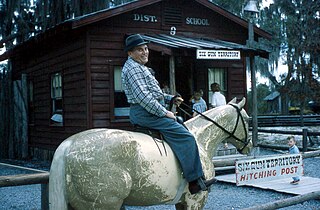
Close enough for a man on a horse.

I seem to collect phrases that cover the sentiment, "It's not perfect, but it will do."  Back in my first radio job, I worked with a guy who would say, "Close enough for government work."  (Of course, repeating that made me zero points with friends who got jobs with the federal government after college.)  The same guy would also sometimes say, "Ain't makin' a watch."  Often he'd say them both, one after another, like this:

"Close enough for government work! Ain't makin' a watch!"

Yesterday, I learned a new handy phrase for something that's less than perfect, but acceptable.  At a gathering of a group of crafters (some quilters, some knitters, some doing other handiwork), one woman said she'd once had an instructor who said of her student work, "A man riding by on a horse couldn't tell the difference."

All these phrases are ways to banish perfectionism.  Of course, we should always strive to do our best work, to catch our mistakes and fix them, and so on.  Nobody wants to be labeled sloppy.  But we're all human, and sometimes we mess up.  And sometimes when we try to fix something, the fix is worse than the original mistake.

That's where I found myself this week with the sweater I've been telling you about.  I thought I had a handle on knitting the nice, wide cable that goes up one side of the front of the sweater.  (You can see a picture of what it's supposed to look like on my post from two weeks ago.) So I tried to work on it while watching a movie.  Sooprise, sooprise, sooprise -- I made a mistake, and I didn't notice it 'til six rows later.  Because the mistake was on the front, I felt compelled to go back and fix it. Let me tell you, ripping a cable back six rows, and then trying to figure out where you are on the chart, is no fun at all.  I managed to fix the first mistake, but my fix made something else look funny, and....  I'm sure you can see where this is going.  After spending several hours over the course of two days on the same six rows of 28 stitches, I finally gave up -- but not until after it occurred to me that I could embroider some chain stitches over the tiny part that still doesn't look right and...all together now...a man riding by on a horse wouldn't be able to tell the difference.

Will it be perfect?  Nope.  Will the garment still be wearable?  Totally.  Will anybody be able to tell the difference?  Probably not even if I tell them.  And it's entirely possible that even I won't be able to tell.

The point is that I could have spent another couple of hours making myself crazy, trying to get the cable absolutely perfect.  That's the trap of perfectionism -- not just in knitting or sewing, but in writing, too.  How much time should you spend on a first draft?  How much time on a rewrite?  Should you torture yourself with making sure that each sentence you write absolutely drips priceless pearls of prose before you move on to the next one?  Will you ever be completely satisfied?

Last night, I began the second editing pass on Gravid.  When I do a read-through, I pay particular attention to any phrases that jar my internal ear, and any word whose meaning doesn't quite convey what I'm trying to say.  Sometimes I move phrases around.  Occasionally I move sentences, or paragraphs, or even blocks of text, and then I have to write connections in order to graft them into their new places and bridge the holes they left behind.  Sometimes I move the attribution from one end of the sentence to the other, or embed it in the middle of the quote, or take it out of the middle and put it at the beginning or the end.

But to be honest, many sentences I don't fuss with at all.  And sometimes after I've fiddled with a particular word or sentence for a while, I decide it was okay to start with.  Not perfect, maybe, but still readable.  A man on a horse wouldn't know the difference.

Somebody told me today that she had decided she would never write the Great American Novel, so she moved on to other things.  Usually, I applaud any effort toward self-knowledge, which is a fine and necessary thing. But the phrase "the Great American Novel" struck me, and started me thinking on this business of perfectionism.

When it comes to writing, is the Great American Novel the only worthwhile goal?  If your first draft is a mess, riddled with plot holes and clunky phrases, are you a failure as a writer?  Is perfect the only thing worth striving for?  Is that what you think, Bunky?

Well, I don't think so.  In fact, I reject that sort of thinking wholesale.  The only thing any of us can do is to tell our own stories in our own ways.  Writing is a craft, to a large degree.  Plot holes can be fixed; so can clunky phrasing.  You may have to write several books before you've got one that's ready for prime time, but that's part of learning the craft.  And even then, it doesn't have to be the most perfect book ever written.  If a man riding by on a horse can't tell the difference, it's close enough for government work.  Ain't making a watch!

***
I had a terrific time Friday night with Coral Russell and Kriss Morton on their Blog Talk Radio show.  Both of them -- and author/blogger Leanne Herrera, too -- had such nice things to say about my work that it's a wonder I could get my head through the doorway afterward.  Thanks, ladies!  (If you missed the show, I've put a link to the left, as well as on the Radio Appearances tab.)

The Orangeberry Big Bang blog tour for Tapped is underway!  Check the Tour Dates tab for this week's stops.  And have a great week, everyone.

***
This moment of imperfect blogginess is brought to you, as a public service, by .